
As the third planet from the sun, the Earth is an extremely intricate, dynamic, and ever-changing planet. There is no way to tell what controls all of its systems and processes, but it is extremely riveting and thought-provoking. One of its more significant mechanisms, that has the power to change landscape and society, is erosion.
Erosion, which has been occurring on Earth for millions of years, is a completely natural existence that can take place in forms of action such as wind, ice, and water. Wind action erosion transpires when strong gusts of wind blow over loose soil which has been heavily used. Ice erosion has numerous ways of making its impact, involving both the movement and thawing of glaciers. Water infiltrates the pores of the rocks and creates fractures which expands strong formations. Water erosion takes place when snowmelt or rain displaces the soil on the ground. If a body of water overflows onto land, for instance a lake, soil particles turn into sediment as they are constantly washed away. Erosion has played a pivotal role in shaping Earth’s landscapes by creating valleys, canyons, lakes, and other equivalent geological features. New landforms have also been created due to the transported sediments from one location to another. However, it also has extremely negative effects which causes problems environmentally and economically.
Many states in America experience a volume of different erosion action, but Maryland is one that has consistently been in the ringer. According to the Maryland Department of Natural Resource’s studies in 2013, approximately 69 percent of the coast (mainly the Chesapeake Bay) was currently eroding. The average rate of erosion was calculated at 0.58 feet per year. As this was nearly ten years ago, there is not much evidence today to show which direction these numbers are traveling. Let’s dive in and evaluate what strides have been taken to ensure positive movement towards solutions on this front.
There's History Here
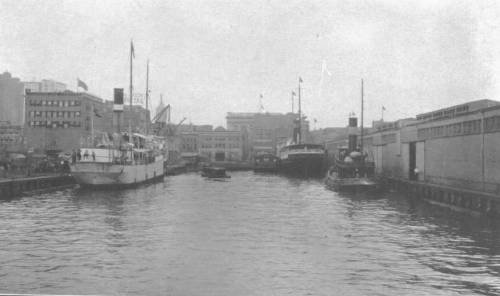
Baltimore Harbor circa 1912. Photo Credit: Kilduffs.com
The Old Line State has had a storied past with the presence of erosion, as well as combating it. Beginning in the 1930s, Maryland began attempting to establish legislation to impede pollutants from entering bodies of water. This was directly from the efforts of nature and human interference. As the state is home to many rivers, there are many points of volatility to keep an eye on. As nothing was being done, Jackson Graham of the U.S. Army Corp of Engineers wrote to Committee on Public Works Chairman Charles Buckley requesting that Congress fund an investigation of the erosion of Maryland's Atlantic shoreline. This plan was rolled into action due to the River and Harbor Act of 1962. However, it wasn’t until 1970 that the State’s General Assembly passed the “Sediment Control Law” which assigned specific programs to handle statewide erosion and sediment control.
These programs were mainly implemented to aid and protect the Chesapeake Bay, but no initiative was truly taken. More legal framework was added through the Chesapeake Bay Agreements and Environmental Protection Agency’s (EPA) 319 Nonpoint Source Program to increase incentive and stimulate action. In 1999, a “Shore Erosion Task Force” was appointed by Governor Parris N. Glendening (D) in order to truly hone in on shoreline control needs, along with outlining local, state, and federal roles for prevention. They identified the need to address the following nine shore erosion issues:
- Immediate response capacity
- Regional shore erosion control strategies
- Project review and implementation criteria
- Cooperative management and implementation
- Standards and practices
- Utilization of available dredged materials
- Public outreach
- Information and data needs
- Long-term funding needs and resources
A supplemental list of recommendations were also included to present a broad range of solutions to the aforementioned issues and set the Comprehensive Shore Erosion Control Plan in stone. As Maryland has enough on their plate with regular erosion, natural disasters have not and will not put them on the proper track. In 2003, category 5 Hurricane Isabel created an extreme amount of damage to the state’s shorelines. Although it made landfall as a category 2, it does not say enough about its aggressive nature. According to Lamere Hennessee and Jeffrey Halka at the Maryland Geological Survey, Isabel caused nearly $84 million worth of destruction to various shoreline structures. Many agencies and groups grew concerned with the disastrous effects of suspended sediment and nutrient influx due to Chesapeake Bay’s lack of recovery. Multiple considerations were bestowed upon researchers and planners, including shoreline erosion in the face of sea level, episodic erosion on account of short-lived storm flooding, and basic wave action.

Parris N. Glendening (D) giving a speech. Source:Wikipedia
Where Else Does This Occur?
Although erosion occurs at a larger than normal rate in the Chesapeake Bay, other bodies of water in Maryland experience subtle but deadly rates of erosion as well. I am referring to lakes, natural and man-made. My family has frequented Deep Creek Lake in McHenry, MD for the past 50 years. It is faced with the same problems as Chesapeake Bay, and one more. On the far west side lies the Deep Creek Hydro-Electric Dam which controls water flow to and from the Youghiogheny River. Every year during the fall and winter period, the Dam releases water out of the lake to prevent ice from eroding the shoreline. Beginning around April, the water level rises until it hits the maximum pool elevation of 2462 feet. When the lake is at its busiest, the rocky wake from recreational watercraft use crashing against the shore is a prominent factor of erosion. Think of about 40 boats passing by your residence daily, and 20 of them producing wakes bigger than the ocean. It extends adverse economic effects on real estate with lake-front properties. There is a state-owned “Buffer Strip” located from the shore to the private-property line, eating up about 25 feet of land. The erosion happening on state-owned land ultimately hurts the value of properties. Lakes accumulating tourist attractions are susceptible to shoreline erosion and must take further measures to ensure its preservation.

My dog Jackson examining the erosion occuring on our property on Deep Creek Lake in Maryland. Photo Credit: Chris Shroyer
Finally, Some Solutions!
Living Shorelines
Exactly how it sounds, it is restoration projects that use the features of natural habitats (such as marsh grasses or oysters) to combat shoreline erosion. In 1968, the Maryland Department of Natural Resource’s Shoreline Conservation Service was created to aid landowners financially to implement enhancement projects for the shore. The late Dr. Edward Garbisch, a pioneer in this field, conducted the first experiments to utilize marsh grasses to combat erosion. This research resulted in the passing of the Living Shorelines Protection Act in 2008. The legislation requires shoreline property owners to use natural solutions to prevent erosion unless they’re able to prove such methods wouldn’t work in the specific scenario. Living shorelines bode as a cost effective and environmentally up-lifting solution.
Man-Made Structures
Although somewhat and not very environmentally stimulating, jetties and seawalls have proven to be effective when combatting shoreline erosion. A jetty is a man-made structure that armors the shoreline by redirecting the longshore current to prevent erosion. It can also be used to connect land with deeper waters for the purpose of docking ships and unloading cargo. A seawall is a vertical construct designed to prevent storm surge flooding and upland erosion. They are typically placed along a considerable stretch of urban beaches or receding property fronts. These structures were created thousands of years ago and have brought many advantages to numerous cultures and societies.